
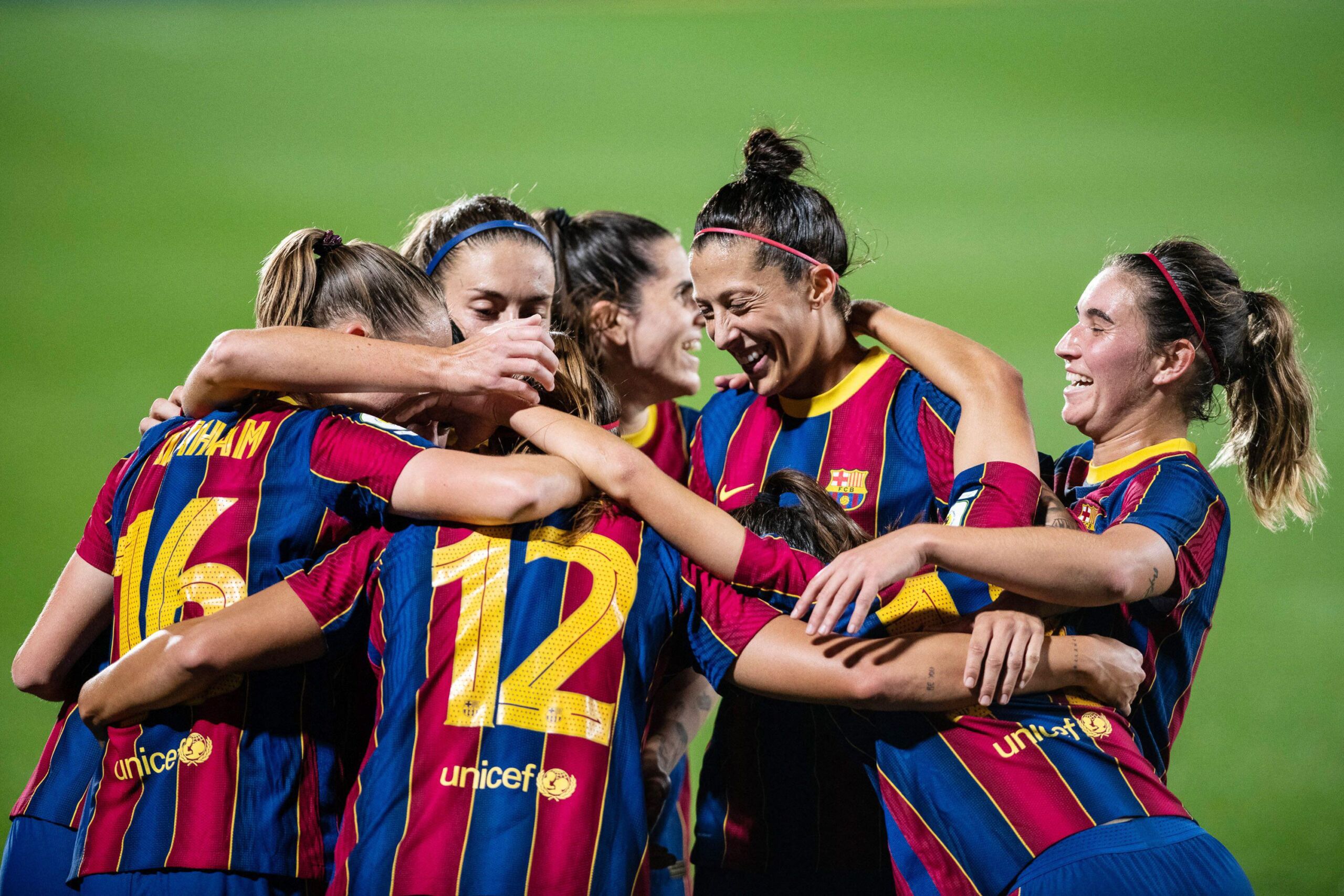
The current global landscape of women’s club football has reached a fascinating point of maturity. The latest efficiency ratings for the Top 25 clubs reveal more than just who sits at number one — they highlight the very different ways leagues around the world are developing elite teams and players.
The following rankings reflect the current Opta Women’s Club Power Rankings as of May 11, 2026. Readers can explore the live rankings and methodology directly through Opta Power Rankings.
Current Top 25 Women’s Clubs (Opta Power Rankings)
- Barcelona
- Chelsea
- OL Lyonnes
- Bayern München
- Manchester City
- Arsenal
- Kansas City Current
- Manchester United
- Real Madrid
- Wolfsburg
- Washington Spirit
- Gotham FC
- Portland Thorns
- Paris Saint-Germain
- Häcken
- Orlando Pride
- San Diego Wave
- Atlético Madrid
- Seattle Reign
- North Carolina Courage
- Eintracht Frankfurt
- Utah Royals
- América
- Racing Louisville
- Roma
Here are the three clearest takeaways from the current Power Rankings:
1. Europe Still Sets the Technical Ceiling
Europe’s top clubs continue to define the highest level of technical execution and tactical refinement in the women’s game.
- The Benchmark: Barcelona remains the only club with a 100.0 rating, serving as the statistical benchmark for technical efficiency.
- The Elite Contenders: Clubs like Chelsea (#2), Lyon (#3), and Bayern Munich (#4) continue to operate at razor-thin margins from one another. These teams consistently represent the tactical and technical standard seen in the latter stages of major continental competitions.
Rather than relying on league-wide parity, Europe’s top leagues continue to concentrate elite talent into a smaller number of highly optimized clubs.
2. The NWSL’s Depth Advantage
The most striking statistic in the data is the sheer volume of representation from the United States. The NWSL accounts for 40% of the Global Top 25, with 10 different clubs making the list.
While many leagues are defined by a few dominant “super clubs,” the NWSL has created an environment where nearly every match operates at a high competitive level. There are very few easy fixtures, and that week-to-week parity forces clubs to maintain consistently high standards.
With teams like Kansas City Current (#7) and the Washington Spirit (#11) leading the way, the league has established arguably the strongest overall competitive floor in women’s football.
3. The Global Middle Tier Is Rapidly Improving
Perhaps the most important long-term trend is the rise of strong clubs outside the traditional power centers of the United States and Europe’s biggest leagues.
- Liga MX Femenil’s Growth: Club América’s rise of +4 spots reflects the increasing investment and quality emerging in Mexico. Clubs are no longer simply regional contenders — they are beginning to statistically rival established European sides like Eintracht Frankfurt.
- Broader Competitive Diversity: Clubs like AS Roma (Italy) and BK Häcken (Sweden) maintaining Top 25 positions show that high-level efficiency is spreading across more leagues and football cultures.
The global conversation is no longer simple. The technical and tactical baseline of women’s football is rising across multiple regions simultaneously.
By the Numbers: League Presence in the Top 25
| League | Representation | Key Strength |
|---|---|---|
| NWSL (USA) | 10 Clubs | Depth, Athleticism & Competitive Parity |
| WSL (England) | 4 Clubs | Recruitment Power & Commercial Growth |
| Frauen-Bundesliga (Germany) | 3 Clubs | Tactical Structure & Consistency |
| Liga F (Spain) | 3 Clubs | Elite Technical Quality |
| Other Leagues (MX, ITA, SWE, FRA) | 5 Clubs | Rising Investment & Competitive Growth |
The Verdict
The data suggests women’s football has entered an era defined by specialization.
Europe’s elite clubs still represent the highest peak of technical and tactical execution, while the NWSL currently offers the deepest league-wide competition in the world, where a large number of clubs can realistically compete at an elite level.
At the same time, emerging leagues and clubs around the world are steadily narrowing the gap. The result is a women’s football ecosystem that is becoming deeper, more global, and more competitive than ever before.

